 Sonal Singh On Sonal's Table

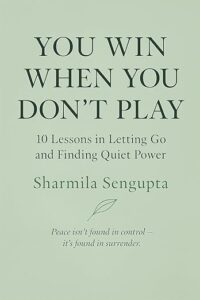
This is a kindle book
You Win When You Don’t Play is not a book you rush through. It’s the kind you sit with. The kind that makes you pause mid-page, realise you’ve been holding your breath, and quietly exhale.
The structure itself feels considerate. Each chapter stands on its own, broken into gentle, digestible sections that deepen the message without overwhelming you. What I especially loved is how every chapter ends, with a story, reflection exercises, and ‘Principles of Peace’. They make the reader sit up and reflect because they’re subtle nudges, little invitations asking you to stop, look inward, and slowly unlearn the patterns that drain us without announcing themselves.
Sharmila Sengupta has a beautiful way of reframing letting go. Walking away from people, habits, and expectations that exhaust us isn’t weakness. It is self-respect. I loved that thought.
Many parts of this book felt uncomfortably familiar. I pride myself on being a 3 a.m. buddy for my friends and truly, some chapters held up a mirror to me. There’s a big difference between holding space for someone and getting stuck in their endless loop of sorrow. I realised I don’t need to fix everything. And I’m not meant to carry an emotional weight that refuses to move or grow.
One question the book quietly slipped into my mind stayed with me long after I finished the chapter: Have I ever been that draining person in someone else’s life? It wasn’t pleasant to sit with. But it was necessary. Hopefully, I am a better person for it.
Some stories felt deeply personal. Sharmila makes a simple but powerful point – not everyone you encounter in life will understand you, accept you, or even notice you, and that’s okay. What matters is alignment with your own truth.
The chapters on surrender and gratitude in the book, offer quiet reassurance. They remind you that when you loosen your grip, life has a strange way of stepping in. The reflections on social media and comparison felt especially relevant, a soft question: are we already living in someone else’s dream?
I’m still warming up to the idea of closure in one of the chapters, but the unsent letter exercise feels like a compassionate starting point.
In the end, You Win When You Don’t Play feels like a mirror, a pause button, and a gentle hand on your shoulder. Because peace doesn’t come from pushing harder, it comes from letting go. And when life gets noisy, this is a book you need to help you to let go.


Thank you for your thoughtful review. I’m deeply grateful that You Win When You Don’t Play resonated with you. Knowing the book helped you pause and reflect means a great deal to me. My hope is that it continues to support readers in finding peace through acceptance and inner alignment. Thank you for sharing your honest experience.